 There is a style (if you can call it that) of shooting video that closely resembles a three year old watering the garden with a hose.
I don’t know if this “style” has a name or not but if you can imagine a three year old watering the garden with a hose… I think you would get the picture!
One could argue that at the end of the exercise all (or most) parts of the garden were in fact soaked, so the system has its merits. However in the case of shooting videos it just dosen’t cut it.
Desperately following the action by mindlessly waving the camera around results in footage that, no matter what you do to it in editing, will look like it was shot by someone… desperately following the action by mindlessly waving the camera around!
Good video comes as a result of reasonably carefully chosen shots that have been edited together to tell the story. Each type of shot has a particular purpose and creates a particular effect.
In the next section are the main shots that are used in the “language” of video but before we get to that it is vital that the footage you take is steady, with little or no camera shake present.
It would be safe to say that currently most people are using some kind of high definition device to take their video.
It is the nature of these systems to massively compress the digital image information being recorded by the device into smaller and more manageable files.
The upside to this is a level of picture quality that a few years ago would have been impossible to attain for the average user and all within files that are a fraction of the size that were previously created.
Now it is not just camcorders that can achieve this quality but also still cameras and tiny handheld devices as well.
The downside is that the software being used to capture and compress the video files throws a great deal of information away in the process.
The result of this is that small movements, jerkiness or shake on the part of the person holding the camcorder can become wildly amplified in the resulting video.
Similarly, zooming or panning has to be slow, steady and smooth otherwise you can end up making your audience dizzy or even nauseous!
It is almost impossible to achieve a good quality handheld shot using these devices. So in order to minimize the effect of shakey or jittery motion in your videos it is vital that you use some kind of support system when shooting.
There are a few things you can do to avoid this and of course the most obvious is to use a tripod.
If you do go with this solution do not buy a cheap tripod. Buy one with a “floating head” which is a kind of hydraulic system that ensures smooth motion.
If a tripod is impractical you can use at least a monopod to get some stability or failing that, BE the tripod and steady yourself against a wall or a tree or anything that won’t move.
It also helps to hold the cam with two hands and lock your elbows into your waist for added steadiness.
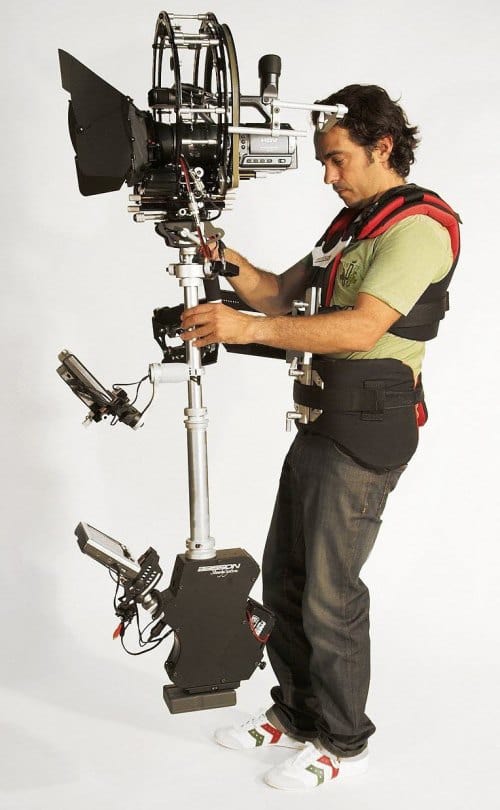
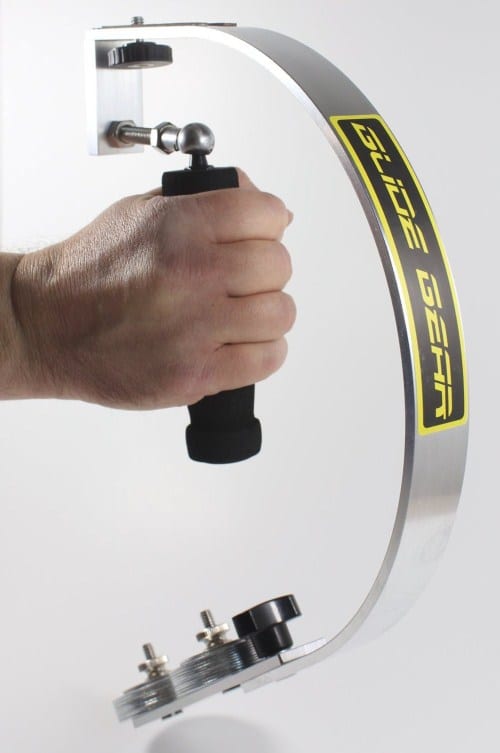
Another device well worth looking into for getting nice steady shots is a handheld stabilizer. These are based on the concept of the original steadycam rigs that were developed for Hollywood allowing long handheld shots to be taken. They can be picked up online and are not too expensive.
I don’t really think you need to go quite as far as this!
I think something more along the lines of this:
Part One – Shooting Better Home Videos
Part Two – Finding the Story in Your Videos
Part Three – Shooting Your Video for Editing
Part Four – Keeping it Steady
Part Five – Basic Video Shots
Part Six – The Rules of Video Composition
Leave a Reply